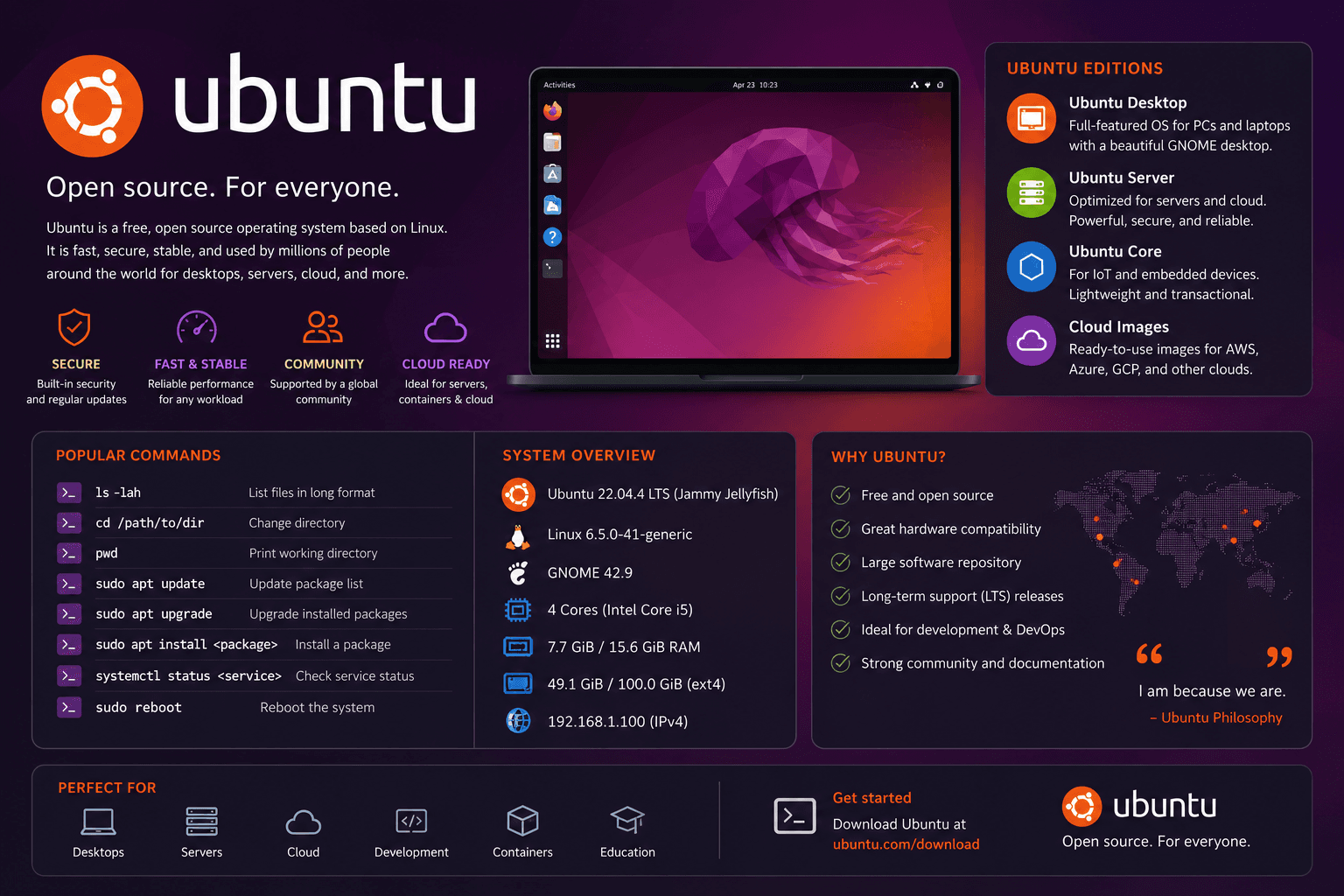
Ubuntu: A Comprehensive Introduction to the Linux Operating System
Introduction
Ubuntu is a free and open-source operating system based on the Linux kernel. It is one of the most widely used Linux distributions and is designed for personal computers, servers, cloud environments, development platforms, and enterprise infrastructure.
Ubuntu is known for being relatively easy to install, secure, stable, and supported by a large global community. It is commonly used by software developers, system administrators, cloud engineers, cybersecurity professionals, students, businesses, and data centers.
The name Ubuntu comes from a Southern African philosophy often translated as:
“Humanity toward others.”
The Ubuntu operating system is developed and maintained by Canonical, together with contributors from the open-source community.
1. What Is an Operating System?
An operating system is the main software that manages a computer’s hardware and applications.
It acts as a bridge between the user, the installed applications, and physical components such as:
The processor
Memory
Hard drives
Network interfaces
Keyboards and mice
Displays
Printers
USB devices
Common operating systems include Microsoft Windows, macOS, Android, iOS, and Linux-based systems such as Ubuntu.
Ubuntu provides the environment required to run applications, manage files, connect to networks, control users, apply security settings, and communicate with hardware devices.
2. What Is Linux?
Linux is the kernel at the core of Ubuntu.
A kernel is the central part of an operating system. It manages processes, memory, storage devices, networking, hardware drivers, and communication between applications and the computer.
Linux itself is not normally distributed as a complete desktop operating system. Instead, organizations and communities combine the Linux kernel with system tools, package managers, desktop environments, and applications. The resulting complete systems are called Linux distributions.
Examples of Linux distributions include:
Ubuntu
Debian
Red Hat Enterprise Linux
Rocky Linux
AlmaLinux
Ubuntu is based on Debian but provides its own release cycle, software repositories, installation tools, support services, and desktop experience.
3. Major Ubuntu Editions
Ubuntu is available in several editions designed for different purposes.
Ubuntu Desktop
Ubuntu Desktop is designed for laptops and desktop computers. It includes a graphical user interface, web browser, file manager, office applications, system settings, and other programs required for normal computer use.
It is suitable for:
Office work
Software development
Internet browsing
Education
Multimedia
Remote administration
Personal computing
Ubuntu Desktop normally uses the GNOME desktop environment.
Ubuntu Server
Ubuntu Server is designed for servers and normally does not include a graphical desktop interface by default.
Administrators usually manage it through the command line, SSH, automation tools, or web-based management applications.
Ubuntu Server can be used for:
Web hosting
Database servers
Mail servers